Full Body Checkup | 74 Tests @ Rs. 799 | Food Intolerance Test @ Rs. 6499 | Thyrocare Packages

  • Home
  • Blogs
  • Blood clot: Symptoms, Causes and prevention
Blood clot: Symptoms, Causes and prevention

Blood clot: Symptoms, Causes and prevention

Posted By Suborna Fermi Posted on May 17, 2026

Overview

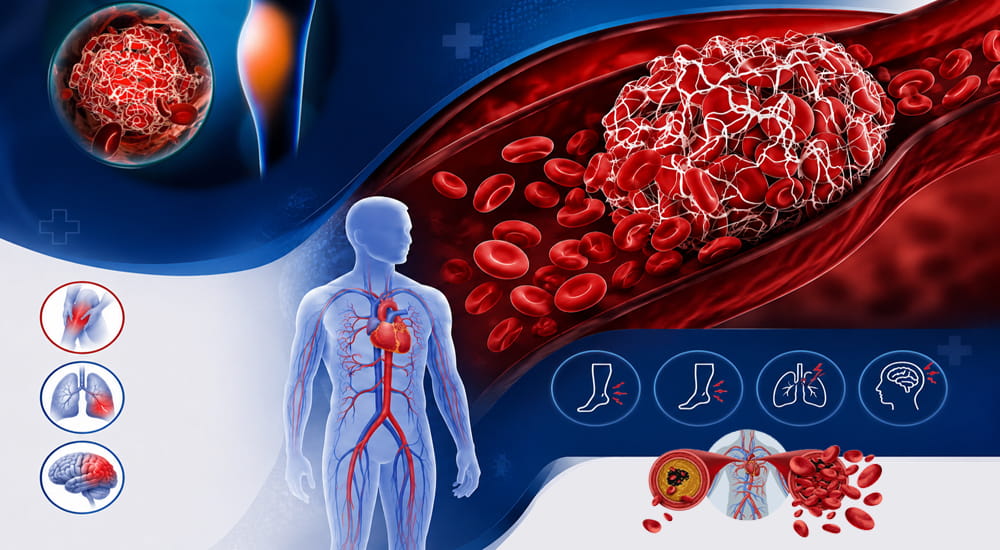
Blood clot is a common issue that happens because of certain factors. It’s basically an amount of blood turning into a partially solid form, causing a clot that blocks the flow of circulation. Let’s delve deeper into what blood clots are and how they occur.

What is blood clotting?

Usually clotting is a natural bodily process that helps your body stop bleeding. In this process, the blood turns into a more solid form. Clots mostly happen as the body’s response to any injury. There are three types of blood clots named venous, arterial and thrombosis. Clots sometimes don’t dissolve naturally, they persist, and that’s the reason why clots can sometimes be dangerous and even life-threatening.

What are the symptoms of a blood clot?

  • Swelling: Once blood clot happens, the affected area gets swollen.
  • Pain: Pain will be felt at the area where the blood clot has taken place.
  • Change of colour: The spot where the blood clot has taken place will start getting a bluish colour tone.

If a person is having a blood clot, then several other symptoms like shortness of breath, dizziness, coughing up blood, headache, numbness, etc may also be felt.

What are the causes of blood clotting?

  • Injury: As mentioned before, blood clot is the body’s response to injuries, therefore, once you have any injury the chances of having a blood clot at the injured part remains high.
  • Immobility: The more a person stays idle or does not move around much, the blood flow starts slowing down, which may cause a clot.
  • Surgery: Surgeries may also cause blood clots because of the created incisions and tissue manipulation.
  • Birth control pills: As blood control pills have estrogen, they increase the chances of blood clot.
  • Medical conditions: Medical conditions like stroke, cancer or heart diseases may also increase the risk of blood clot.

How to prevent blood clot?

  • Regular exercise improves overall circulation in a human body and reduces the risks of blood clot.
  • Smoking increases the risks of blood clot by damaging the linings of your blood vessels. Therefore, staying away from unhealthy habits like smoking will help you stay away from the risks of blood clot.
  • Weight management is also necessary to prevent blood clot because excessive weight may put your vessels and heart into strain, which may increase the risks of blood clotting.
  • Elevating your legs sometimes may also help you reduce pooling of blood in the vessels.

Apart from all these, you may also consider taking certain medications that are used to treat blood clotting. However, you must consult a doctor first to know about those medicines and to discuss further treatment options.