 Cart
Cart 
 Cart
Cart
Popular Packages
Blood Tests
Package Categories
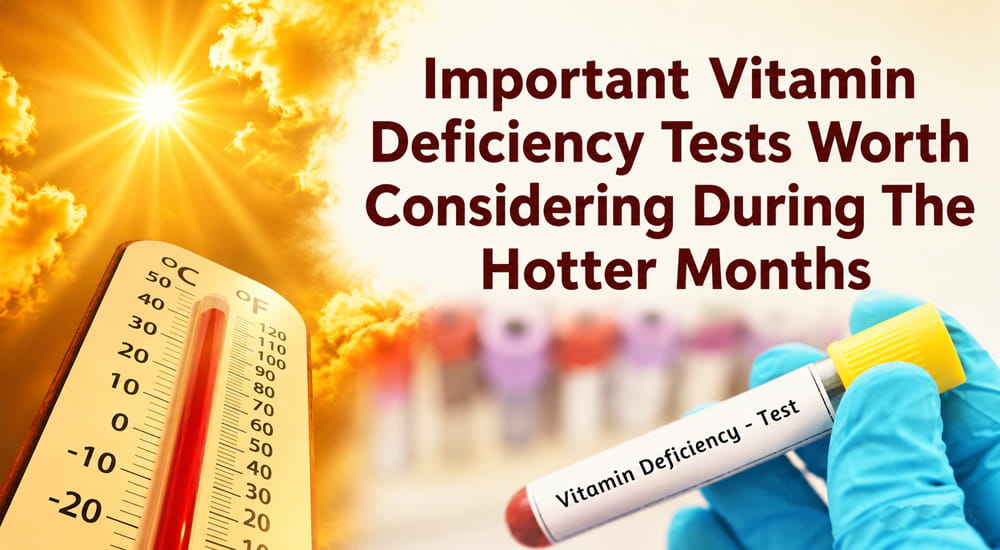
Summer has a strange way of disguising health problems.
You feel tired? Must be the humidity. Dizzy in the afternoon? Probably dehydration. Hair shedding more than usual? “Seasonal,” people say. But not always.
Behind many common summer complaints lurk silent vitamin deficiencies quietly draining energy, weakening immunity, and slowing the body down little by little. Excessive sweating, irregular eating habits, heat exhaustion, and poor sleep, summer places more stress on the body than most people realize.
Fortunately, a few blood tests can reveal what’s really going on beneath the surface. Here are seven important vitamin deficiency tests worth considering during the hotter months.
1. Vitamin D Test
Oddly enough, even during peak summer, Vitamin D deficiency remains incredibly common. Spending hours indoors. Using sunscreen everywhere. Getting minimal morning sunlight. The result? Low Vitamin D despite blazing sunshine outside.
A 25-hydroxy Vitamin D blood test helps measure whether your levels are adequate. Low Vitamin D may trigger:
2. Vitamin B12 Test
When concentration drops and exhaustion refuses to leave, Vitamin B12 deficiency often enters the conversation.
This vitamin supports nerve health and red blood cell production. A Vitamin B12 test can help detect whether symptoms like tingling, forgetfulness, weakness, or brain fog are connected to a deficiency.
3. Iron and Ferritin Test
True, iron is technically a mineral. Ignore it, and summer fatigue may become relentless. Poor eating habits, skipped meals, or heavy sweating can reduce iron stores over time. Ferritin testing helps determine how much iron the body has stored. Low levels often lead to:
4. Folate (Vitamin B9) Test
Rarely discussed, but important.
Folate supports cell growth and healthy red blood cell formation. Low levels may cause exhaustion, irritability, or mouth ulcers. People relying heavily on processed foods during the summer often miss adequate folate intake without realizing it.
5. Vitamin C Test
Summer infections, dull skin, slow wound healing — occasionally, vitamin C deficiency sits underneath them all.
This nutrient plays a key role in immunity and collagen production. Poor dietary habits or excessive heat stress may gradually lower levels.
6. Electrolyte and Magnesium Test
Magnesium, sodium, and potassium also leave the body with sweat, especially during outdoor activity or heat exposure.
Low magnesium may contribute to muscle cramps, fatigue, headaches, or poor sleep. An electrolyte panel helps identify whether dehydration has disrupted mineral balance.
7. Complete Blood Count (CBC)
Simple test, but surprisingly helpful.
A CBC evaluates overall blood health and can reveal signs of anemia, infection, or nutritional deficiencies early on. If summer exhaustion feels excessive, this test often provides valuable clues.
Final Thoughts
Summer health is not simply about staying cool.
Sometimes the body asks for help in quieter ways — through fatigue, weakness, headaches, or unexplained sluggishness. Blood tests offer clarity before symptoms become bigger problems. Heat can hide deficiencies remarkably well. Your body, however, always leaves hints.